> For the complete documentation index, see [llms.txt](https://docs.defguard.net/llms.txt). Markdown versions of documentation pages are available by appending `.md` to page URLs; this page is available as [Markdown](https://docs.defguard.net/using-defguard-for-end-users/desktop-client/instance-configuration.md).
# Instance configuration
In this guide, you will learn how to add, remove and update Instance in Defguard desktop client.
{% hint style="warning" %}
Defguard Desktop Client is required if you want to use Multi-Factor Authentication, as any other WireGuard client doesn't support this functionality.
{% endhint %}
### Obtaining URL and Token
{% hint style="info" %}
If you are looking for how to generate tokens for your users as an Administrator, look here:
[Adding client device](/features/wireguard/remote-desktop-activation.md)
{% endhint %}
1. Log in to your Defguard account.
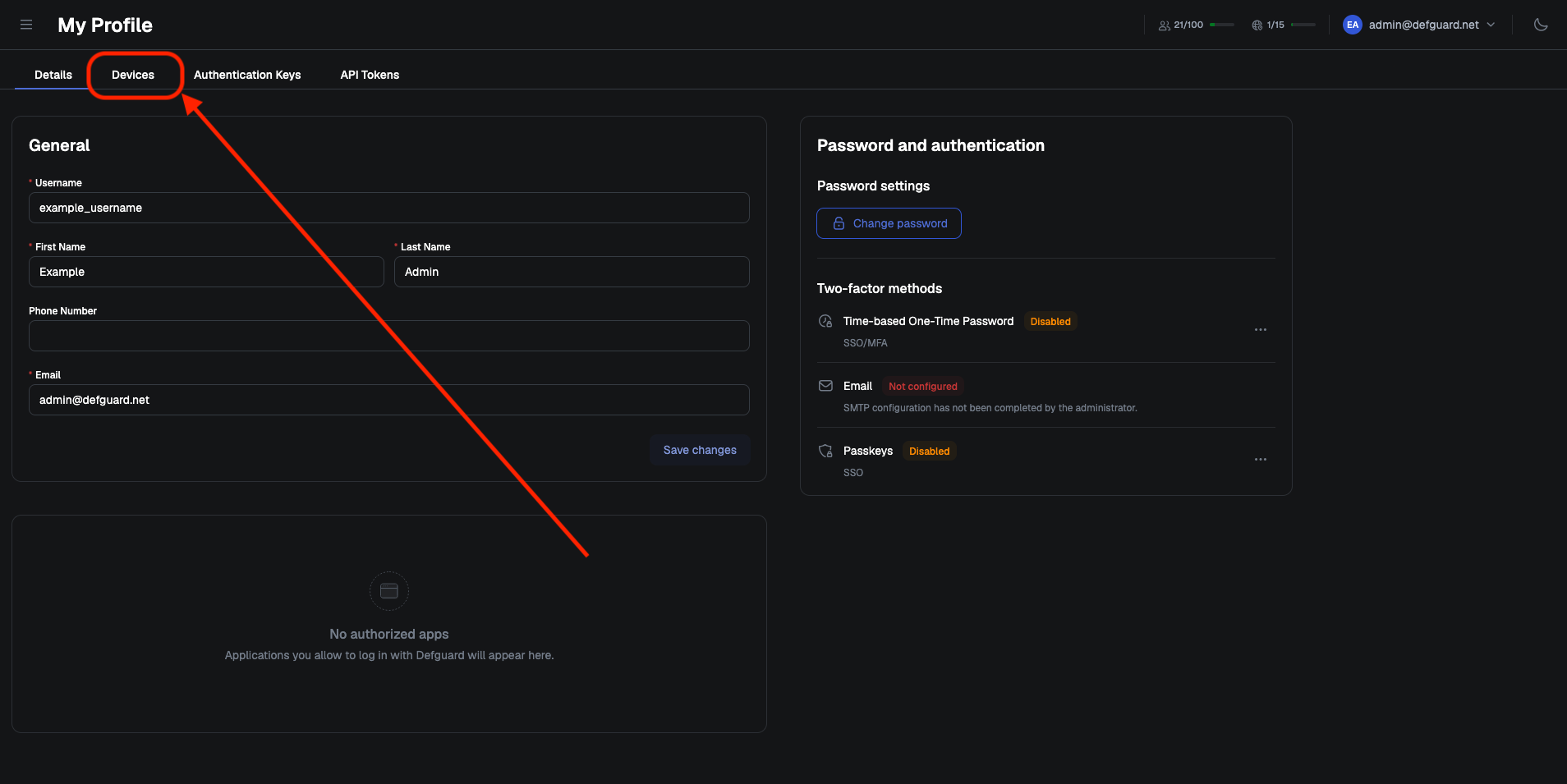
2. Go to **My Profile** tab and select **Devices** tab.
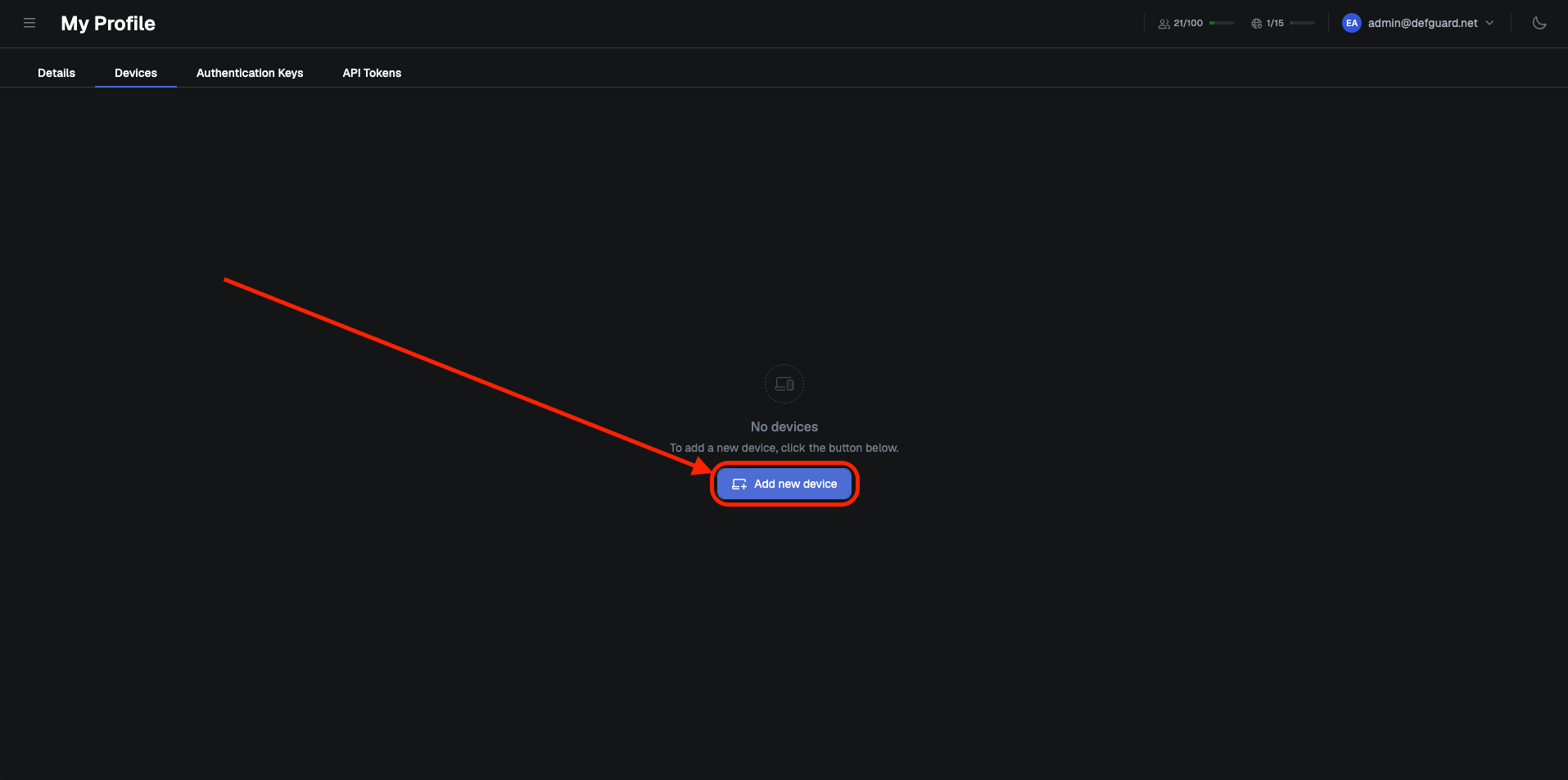
3. Click **Add new device** button.
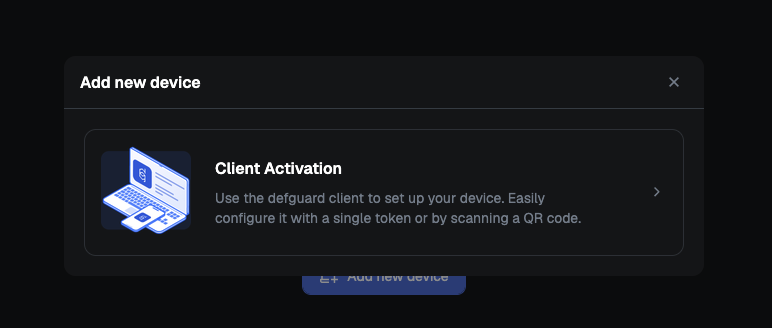
4. Click **Client Activation**.
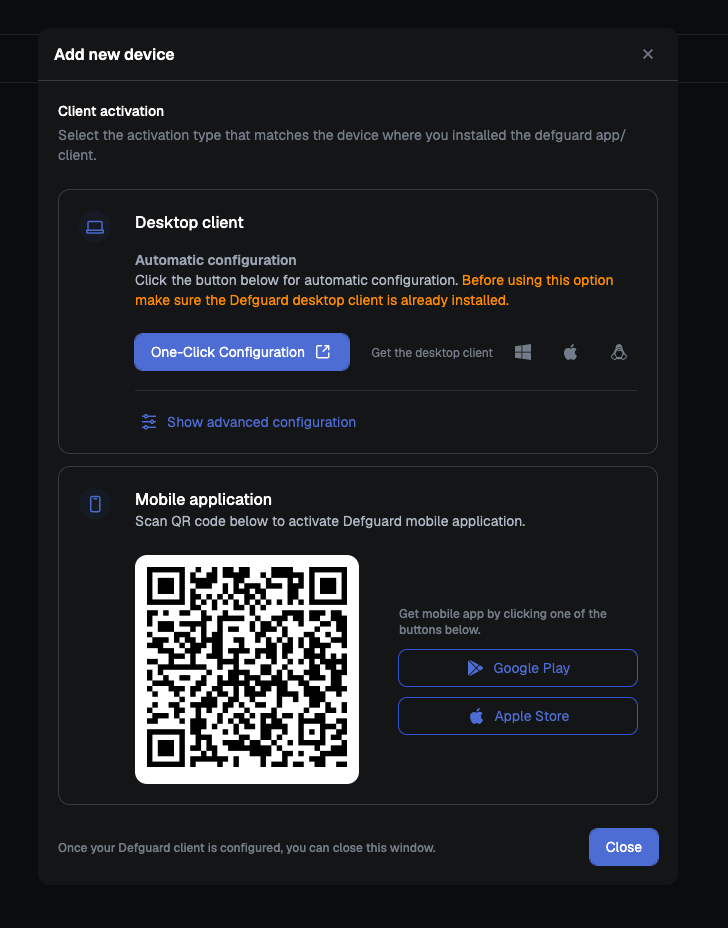
5. Afterwards, use **One-Click Configuration** or click **Show advanced configuration** and copy **URL** and **Token** manually.
### Manually Adding Instance
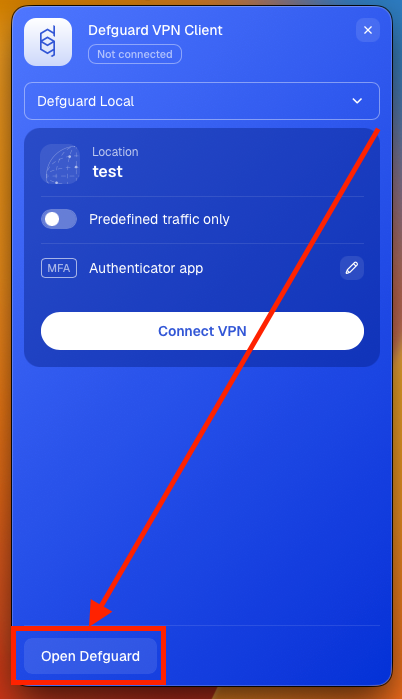
1. If you don't have **Defguard** in full view mode, open **Defguard** from tray view, and click **Open Defguard**
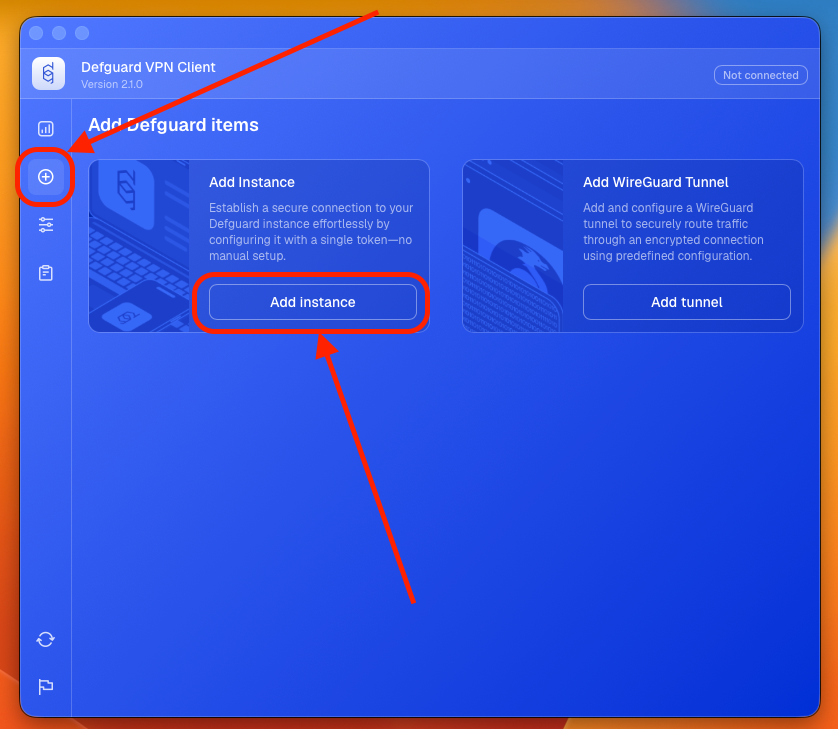
2. Click **Add Instance**.
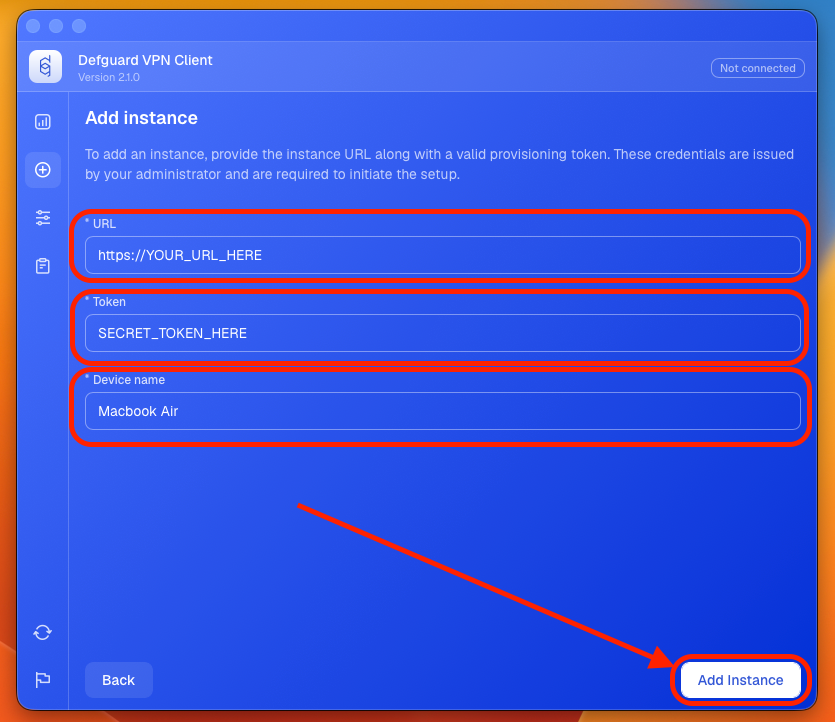
3. Enter URL, Token and Device name of your choice, then click **Add Instance**. (If you don't have URL/Token, check out [this section](#obtaining-url-and-token))
### One-click Desktop Configuration
You can skip the whole process of entering the token/URL by clicking "One-Click Desktop Configuration". Here is a video describing the whole process:
{% embed url="" %}
### Connecting to Instance
#### Desktop client in full view mode
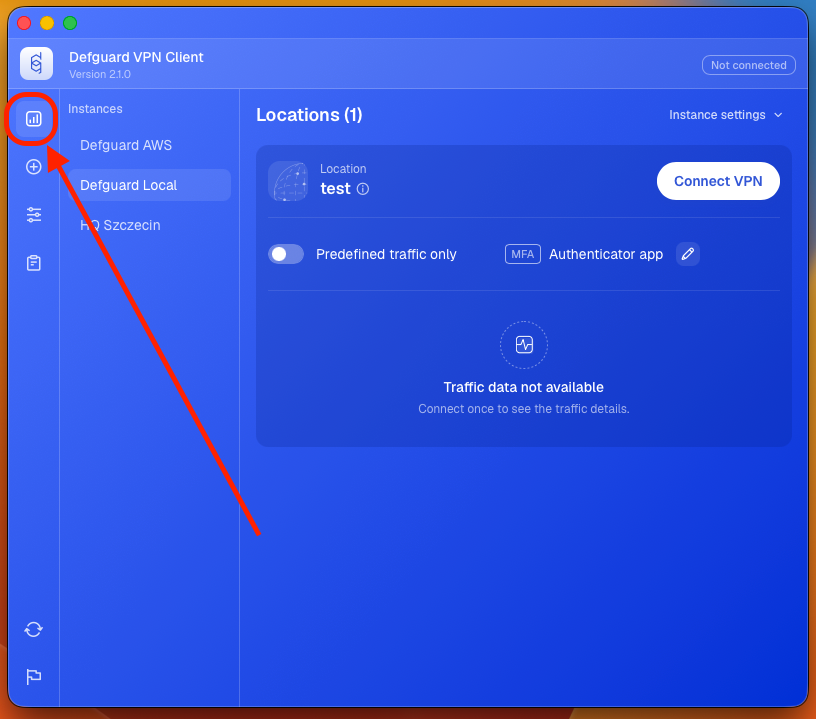
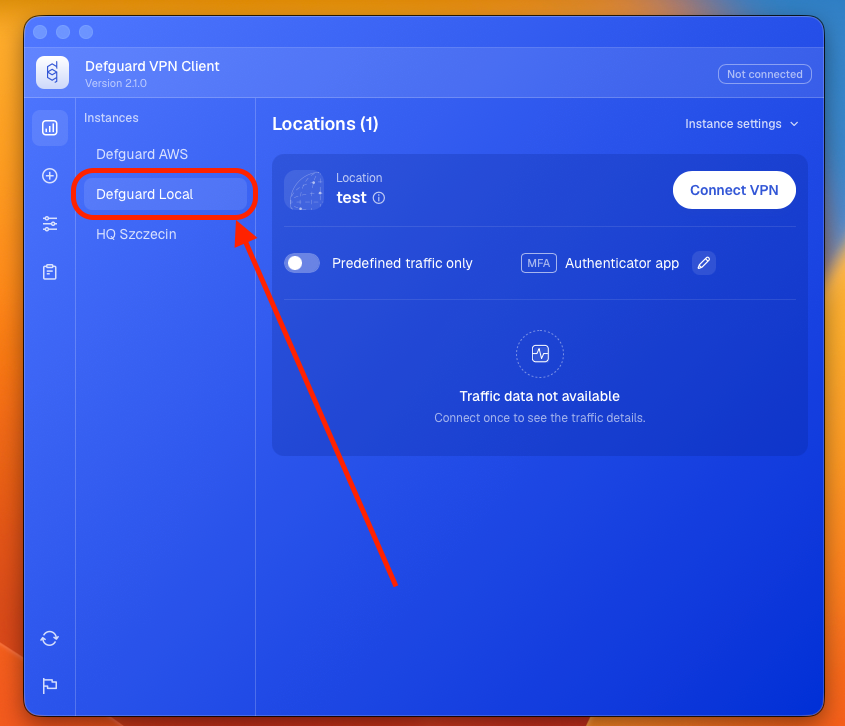
1. Go to **Instances**
2. Select the instance you want to use
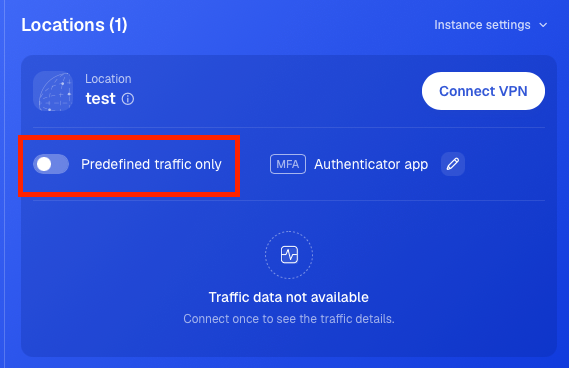
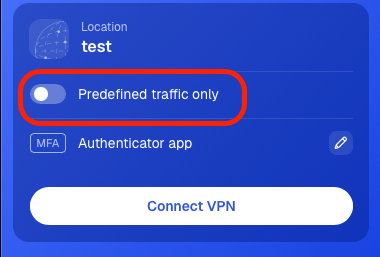
3. Choose allowed traffic
{% hint style="info" %}
* **Predefined traffic only** will only route traffic specified by your administrator.
* **All traffic is allowed** will route everything through VPN tunnel.
{% endhint %}
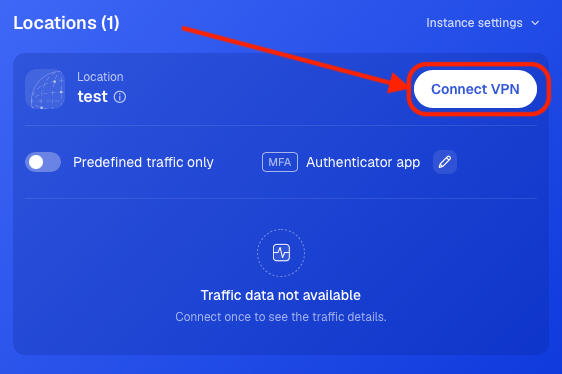
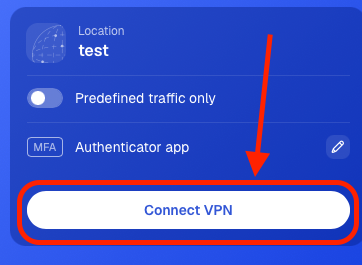
4. Click **Connect VPN**
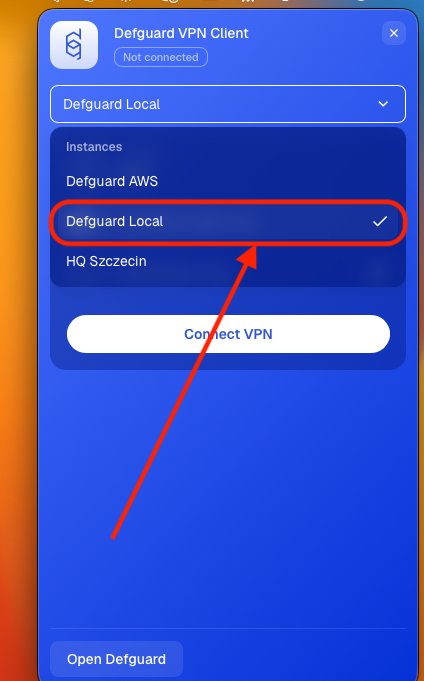
#### Desktop client in tray view mode
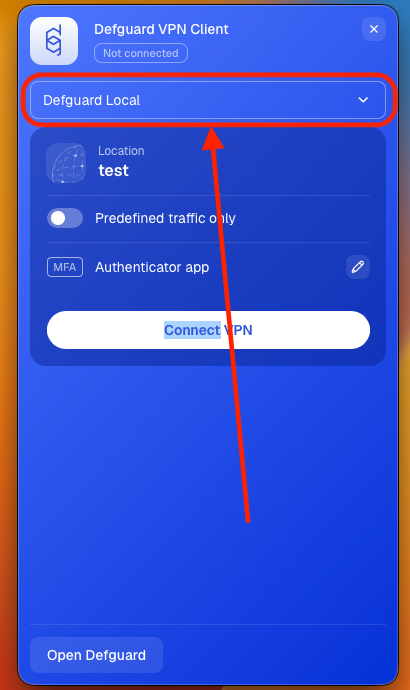
1. Click on instance list
2. Select the instance you want to connect to
3. Choose allowed traffic
{% hint style="info" %}
* **Predefined traffic only** will only route traffic specified by your administrator.
* **All traffic is allowed** will route everything through VPN tunnel.
{% endhint %}
4. Click **Connect VPN**
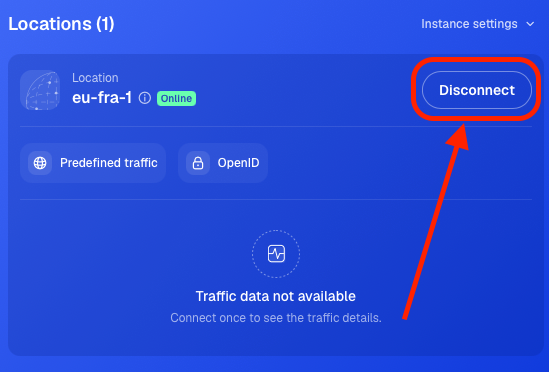
### Disconnecting from Instance
Click **Disconnect** next to the location you are currently connected to.
### Updating Instance
If you want to update your instance manually:
1. If you don't have **Defguard** in full view mode, open **Defguard** from tray view, and click **Open Defguard**
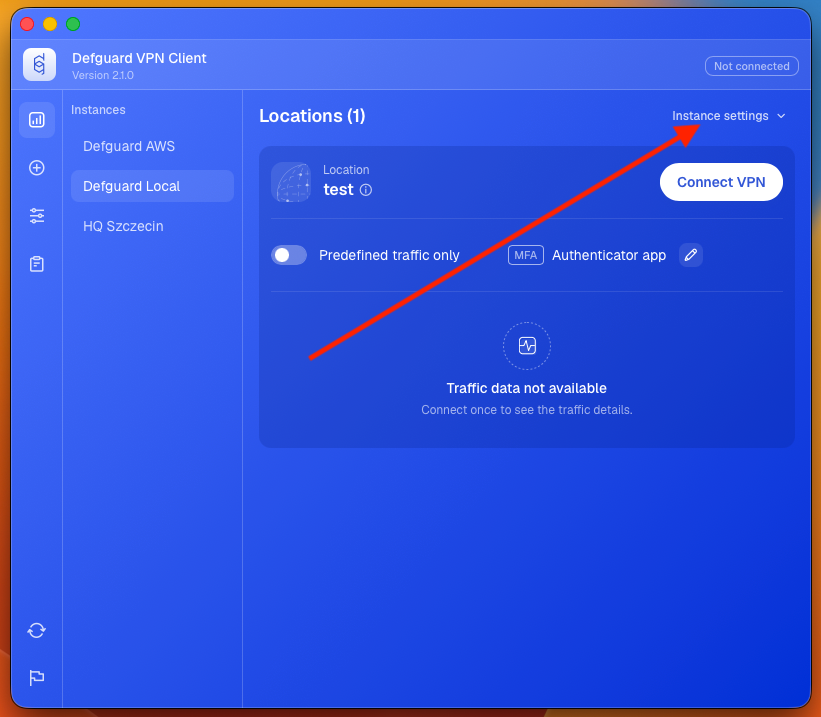
2. Go to your Instance and click **Instance settings**
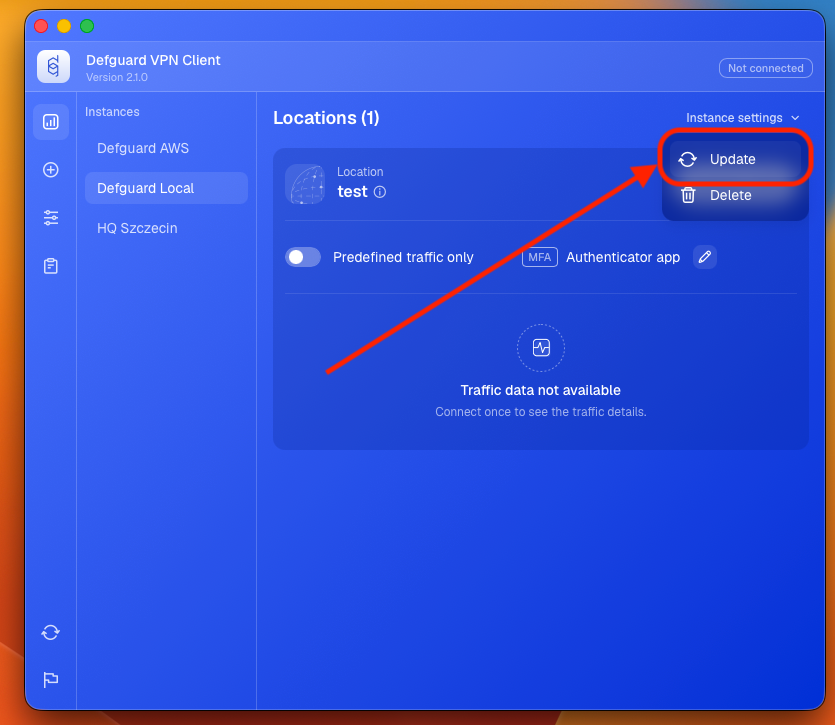
3. Click **Update**
{% hint style="warning" %}
Only tokens issued from that specific instance will work.
{% endhint %}
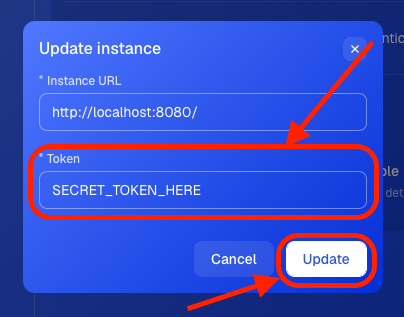
4. Enter Token provided by your administrator, or generate it [on your own](#obtaining-url-and-token). Then click **Update**
Your Instance will update immediately.
### Why do instances need updates?
Defguard Desktop stores all information locally and doesn't communicate with Defguard outside the registration process. This means that the information about an instance is a snapshot of the moment you registered it in the desktop client, and you might want to update it, for example when locations are added or removed.
{% hint style="success" %}
If you have a Business or Enterprise plan, all desktop clients and all instances are [synchronized automatically and in real-time.](/features/remote-user-enrollment/automatic-real-time-desktop-client-configuration.md)
{% endhint %}
### Removing Instance
1. If you don't have **Defguard** in full view mode, open **Defguard** from tray view, and click **Open Defguard**
2. Go to your Instance, click **Instance settings**
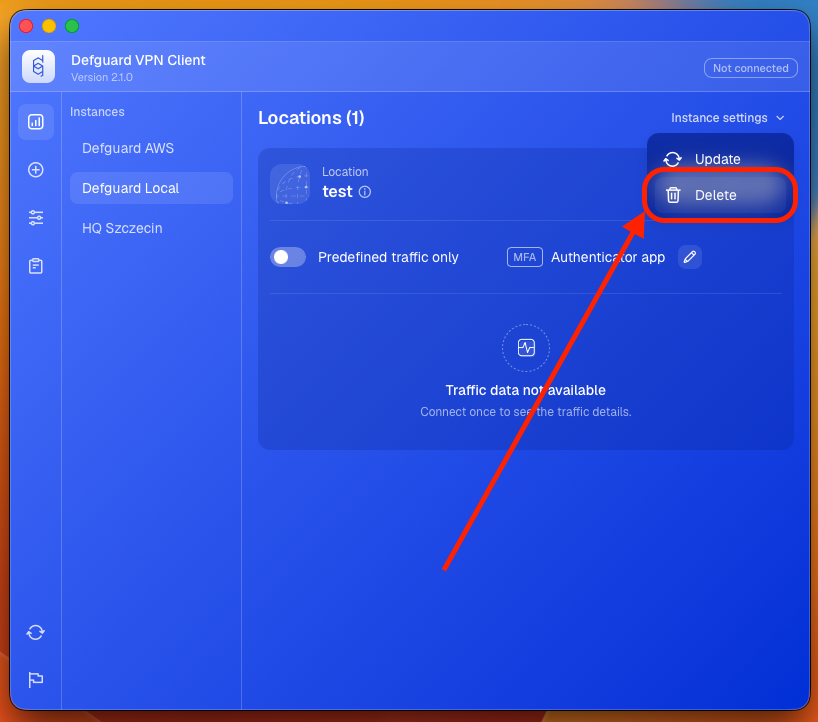
3. Click **Delete**
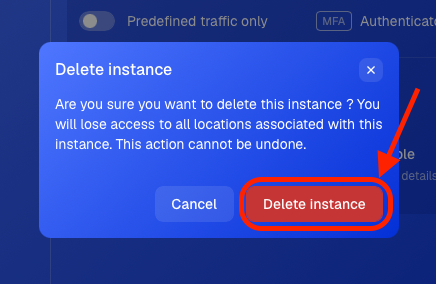
4. Confirm with **Delete instance** button
Your Instance will be removed immediately.